What If Your Evening Scroll Could Finally Feel Meaningful?
Have you ever found yourself mindlessly browsing apps late at night, only to feel emptier afterward? What if that same time could leave you calmer, wiser, and more connected? I used to dread my evenings—until I discovered how a simple shift in my tech habits transformed them. Now, instead of endless scrolling, I end each day with quiet curiosity. Let me show you how a quiet corner of the internet can turn your screen time into something that truly nourishes you.
The Problem with Evening Screen Time
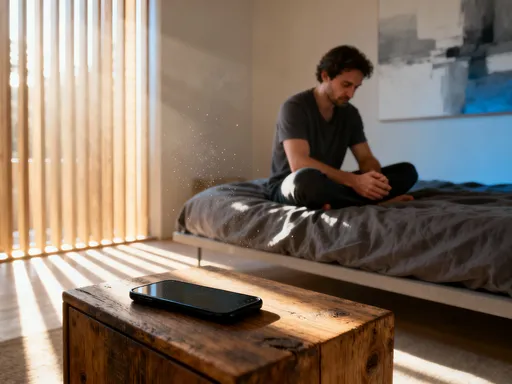
You know the routine. The kids are finally asleep, the dishes are done, and you sink into the couch with your phone. Just a few minutes, you tell yourself. But before you know it, an hour has passed. You’ve watched a cooking fail video, scrolled through vacation photos from someone you barely remember from high school, and read three conflicting articles about sleep. And how do you feel? Not relaxed. Not inspired. Just… tired. And a little hollow inside.
I was there for years. My phone was supposed to be my escape, my little reward after a long day. But instead of helping me unwind, it left me more wound up. My thoughts raced. My eyes felt heavy, but my mind wouldn’t shut off. And worst of all, I felt disconnected—not just from the people around me, but from myself. I wasn’t resting. I was just consuming. And the content I was consuming wasn’t feeding me. It was draining me.
Here’s the truth: most of what we see at night isn’t designed to calm us. It’s designed to grab our attention. Bright colors, fast cuts, emotional hooks—our brains are wired to respond, but not in a healthy way. This kind of screen time overstimulates us when we should be slowing down. It floods our nervous system with input when what we really need is stillness. And because so much of it is comparison-based—look at this perfect life, this perfect body, this perfect home—it quietly chips away at our peace of mind.
And yet, we keep doing it. Why? Because it’s easy. Because we’re tired. Because the silence can feel heavy when the house is quiet and the day’s to-do list still echoes in our heads. We reach for our phones like a comfort blanket, hoping for relief, but we end up with noise instead. The good news? There’s another way. A way to use your screen that doesn’t leave you feeling empty. A way that actually helps you reconnect—with your curiosity, with your calm, and with the person you are when the world slows down.
A Surprising Alternative: Knowledge Q&A Platforms After Dark
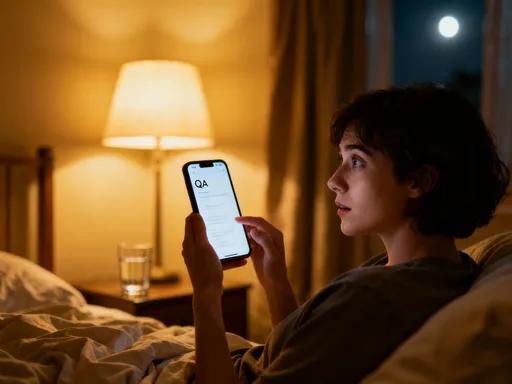
It started by accident. One night, instead of opening my usual apps, I typed a question into a knowledge-based Q&A platform—something I’d barely noticed before. “Why do stars twinkle?” I didn’t expect much. But what I found surprised me. Not a quick, robotic answer, but a thoughtful, human explanation from someone who clearly loved astronomy. They didn’t just give facts—they told a story. They explained how Earth’s atmosphere bends light, how turbulence makes stars shimmer, and how sailors once used that flicker to read the weather. It was peaceful. It was interesting. And for the first time in weeks, I didn’t feel like I was wasting my time.
That night, I didn’t feel restless. I felt… quiet. Not sleepy, not bored, but gently awake in a good way. It wasn’t entertainment. It was engagement. And it felt completely different from the usual scroll. No ads. No pressure. No comparison. Just a question, and a real person taking the time to answer it with care.
Since then, I’ve made this my new nighttime habit. Instead of doomscrolling, I go to these platforms—not to study, not to impress anyone, but to explore. Sometimes I ask about how bread rises, or why we dream, or how hummingbirds hover. Other times, I just browse questions that catch my eye. What’s the history of lullabies? Why do we yawn? Can plants feel pain? Each one feels like a tiny door opening into a world I didn’t know I wanted to see.
And here’s the beautiful part: the people answering aren’t celebrities or influencers. They’re teachers, gardeners, retirees, nurses, parents—just regular folks sharing what they know with kindness. You can feel the care in their words. There’s no performance, no filters. Just honesty. And in the quiet of the evening, that kind of human connection is like a warm drink for the soul. It doesn’t shout at me. It speaks softly. And I listen.
Why These Platforms Work So Well at Night
So why does this feel so different from regular screen time? It’s not just what I’m reading—it’s how it meets me in the moment. Late at night, our minds aren’t looking for speed. We’re not in “get things done” mode. We’re in “be with myself” mode. And these platforms match that rhythm perfectly. They don’t rush me. They invite me to pause. To think. To wonder.
Think about it: most social media is built for reaction—likes, shares, comments. It’s fast, loud, and often shallow. But knowledge Q&A platforms are built for reflection. The questions are deeper. The answers take time. You can read one response slowly, sit with it, even come back to it tomorrow. There’s no algorithm pushing the most outrageous thing to keep you scrolling. Just real questions from real people, and thoughtful answers from others who care.
And that’s exactly what we need at night—not more stimulation, but meaning. Not distraction, but connection. When I read about why the sky changes color at sunset, or how bees communicate, or what gives vanilla its scent, I’m not just learning facts. I’m remembering that the world is full of wonder. I’m reconnecting with a part of myself that got buried under grocery lists and school pickups and work emails.
There’s also something deeply comforting about knowing that somewhere, someone took the time to explain something clearly, kindly, without expecting anything in return. It reminds me that we’re not alone in our curiosity. That there are people out there who care about the same small, beautiful things I do. And in those quiet hours, when the house is still and the world feels far away, that sense of quiet companionship makes all the difference.
Creating Your Own Evening Ritual
You don’t need a big change to start. In fact, the smaller, the better. This isn’t about adding another task to your day. It’s about replacing one habit with another—one that feels better. Here’s how I do it: after dinner, I make a cup of herbal tea. I turn off the overhead light and switch on a soft lamp. I grab my phone or tablet, but this time, I open a Q&A platform instead of social media. I don’t set a timer. I don’t pressure myself to “learn something important.” I just say, “Let’s see what’s interesting tonight.”
At first, my husband teased me. “Reading smart stuff before bed?” he’d say, half-joking. “What, no cat videos?” I laughed, but I kept going. And slowly, he started noticing. “You seem calmer in the evenings,” he said one night. “Like you’re really here.” That meant more than any compliment.
The key is to make it feel like rest, not work. So I keep it simple. I don’t take notes. I don’t quiz myself. I just let my curiosity lead. Sometimes I spend ten minutes. Sometimes twenty. When my eyes get heavy, I stop. No guilt. No pressure. It’s not about how much I learn. It’s about how I feel when I’m done.
If you’re not sure where to start, try typing in something small—something you’ve always wondered about but never looked up. “Why do we have fingerprints?” “How do mirrors work?” “What makes rain smell so good?” See what comes up. Read one answer. If it speaks to you, stay. If not, close it and try again tomorrow. This isn’t a test. It’s a gift you give yourself.
Discovering Unexpected Personal Growth
Here’s something I didn’t expect: over time, these little moments added up. Not in a flashy way. No certificates. No dramatic transformations. But quietly, steadily, I began to notice changes in how I thought, how I saw the world, even how I parented.
One night, I read a detailed answer about composting—how worms break down food scraps, how soil regenerates, how even banana peels can feed new life. The next weekend, I suggested we start a small compost bin in the backyard. My kids were skeptical, but we tried it. Now, it’s part of our routine. We save our apple cores and coffee grounds, and my daughter loves checking on the worms like they’re tiny pets. I didn’t set out to become a green thumb. But curiosity led me there.
Another time, I read about the science of kindness—how small acts can reduce stress, how empathy grows when we practice it. I started paying more attention to the little things: holding the door, smiling at the cashier, listening without rushing. I didn’t do it for recognition. I did it because it felt right. And slowly, I noticed I was less irritable. More patient. More present.
And here’s the sweetest surprise: I started answering questions too. At first, just simple ones—how to remove crayon from walls, the best way to store fresh herbs. But then, someone asked about managing anxiety as a parent. I wrote what I knew—what helped me, what didn’t, what I was still learning. I hit “post” and felt nervous. But the next morning, I saw a reply: “Thank you. This helped me feel less alone.” That moment stayed with me. I wasn’t just taking from the internet. I was giving back. And that felt powerful.
Strengthening Relationships Through Shared Curiosity
This habit didn’t just change me. It changed how I connect with others. I started sharing little things I’d learned—nothing long, just snippets. At breakfast, I told my son why the ocean is salty. At a family dinner, I shared how honeybees dance to tell each other where flowers are. My niece’s eyes lit up. “They do a dance?” she said. “Can I look it up?” And just like that, we spent twenty minutes watching videos together, laughing, learning.
These moments aren’t grand. But they’re real. They create connection without pressure. No debates. No drama. Just shared wonder. And that’s something we all crave—especially as we get older, when life can feel so routine.
One night, I read an answer about the Japanese concept of “wabi-sabi”—finding beauty in imperfection, in the worn and weathered. I thought about my chipped mug, my wrinkled hands, the creaky floorboard in the hallway. Instead of wishing they were perfect, I felt a strange sense of peace. The next day, I mentioned it to my sister. We talked for an hour about what we’d learned to love about aging, about how our homes—and our lives—tell stories through their flaws.
That conversation deepened our bond in a way a thousand text messages never could. Because we weren’t just catching up. We were reflecting. Growing. Together. And it started with one quiet moment on my phone.
A Calmer, More Connected Way to End the Day
Looking back, I realize how much I was missing in those years of mindless scrolling. I wasn’t just wasting time. I was missing myself. I was so busy consuming noise that I forgot how to listen—to my thoughts, to my feelings, to the quiet wisdom that comes when we slow down.
Now, my evenings feel different. They still aren’t perfect. Some nights, I still reach for the old habits. But more often, I choose curiosity. I choose stillness. I choose the kind of screen time that doesn’t drain me—but fills me.
This isn’t about becoming an expert. It’s not about self-improvement or productivity. It’s about presence. It’s about ending the day with a sense of peace, of gentle wonder, of being exactly where you are—awake, aware, and alive.
If you’ve ever looked at your phone and thought, There has to be a better way, I’m telling you—there is. You don’t have to give up your screen. You just have to use it in a way that honors you. That sees you. That cares for you.
So tonight, try something different. Instead of scrolling, explore. Ask a question. Read an answer. Let yourself wonder. Let yourself be curious. Because that quiet part of you—the one that still marvels at fireflies and starlight and the smell of rain—deserves to be seen. And sometimes, the most meaningful screen time is the kind that helps you remember who you are.