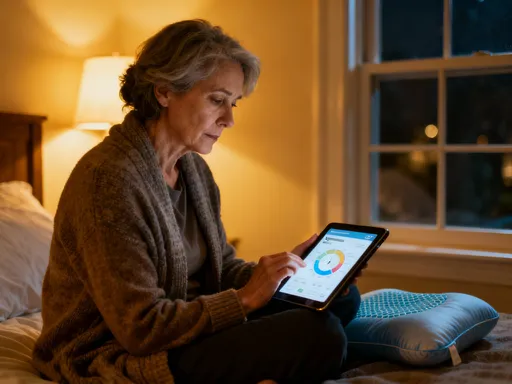
Tired of ‘We’ll video call later’? This changed how our family stays close
Family video calls kept getting postponed—until we found a simpler way. No more forgotten links, mismatched time zones, or awkward silences. Just real moments, shared naturally. I learned that staying connected isn’t about fancy tech—it’s about making it effortless. For years, we told ourselves we’d call every Sunday, but someone was always busy, the Wi-Fi was spotty, or Grandma didn’t know how to join the link. We loved each other deeply, but our attempts to stay close felt like chores. Then one day, my niece sent a 15-second voice note saying, 'Look what I made in art class!'—and something clicked. It wasn’t perfect, high-definition video, but it was real, immediate, and full of joy. That small moment changed everything. We stopped chasing the ideal family call and started building connection into the quiet corners of our days. This is how we finally made remote family feel like *family*, even from miles away.
The Broken Promise of “We’ll Call Later”
How many times have you said, “We’ll catch up soon,” only for that call to vanish into the busy blur of life? I’ve lost count. We mean it when we say it—of course we do. We miss our siblings, our parents, our cousins. We want to see their faces, hear their voices, know how they’re really doing. But somehow, the call never happens. Maybe it’s because scheduling across three time zones feels like planning a military operation. Or maybe it’s because someone’s always got a crying baby, a work meeting, or dinner burning on the stove. The truth is, good intentions aren’t enough. What we thought was a lack of effort was actually a lack of the right rhythm.
I remember one Mother’s Day, we all promised to do a big family video call at noon Eastern time. My sister in California had to wake her kids early. My brother in Florida was rushing back from a doctor’s appointment. And my mom, who lives alone now, spent an hour setting up her tablet, only to miss the call because the link expired. When we finally connected an hour late, it felt rushed, strained, and honestly? A little sad. We laughed, we showed off flowers, but it didn’t feel like celebration—it felt like obligation. Afterward, I realized: we weren’t failing because we didn’t care. We were failing because the method was wrong. Expecting everyone to be available at the same time, on the same app, with the same tech skills, wasn’t realistic. It wasn’t about love. It was about logistics.
And it’s not just holidays. Even weekly check-ins would fall apart. My mom would forget to turn on notifications. My teenage nephew would say the app was 'lame.' My dad would say, 'Just call me like normal.' The more we tried to force traditional video calls, the more disconnected we felt. That’s when I started asking: what if we stopped treating family connection like a scheduled appointment? What if we let it breathe—small, simple, and natural? That shift in thinking changed everything.
Why Most Remote Connection Tools Fall Short
Let’s be honest: most tech tools promise connection but deliver frustration. We’ve all downloaded that shiny new app—'It’s so easy!'—only to find out Grandma can’t figure out the login, or the kids get bored waiting for everyone to join. The problem isn’t the people. It’s the design. So many video platforms assume everyone is tech-savvy, has reliable internet, and can drop everything at a moment’s notice. But real families don’t work that way. We’ve got grandparents who still use flip phones sometimes, teens who live on social media, and parents juggling ten things at once.
I tried group video calls on three different apps. One needed a password, a link, and a download. Another froze every time someone moved their tablet. A third required everyone to be online at the exact same second, or the call would drop. After the third failed attempt, my mom said, 'Honey, I love you, but I’m not doing this again.' That broke my heart. Not because the tech failed—but because she felt shut out. And that’s the hidden cost of these tools: they can make people feel like burdens instead of loved ones.
Messaging apps aren’t much better. Sure, we can text, but texts feel flat. A 'How are you?' gets a 'Fine.' And that’s it. No tone, no expression, no warmth. Sending photos helps, but if they’re buried in a crowded group chat, they get lost in the noise. I once sent a picture of my daughter’s first bike ride, and by the time Grandma saw it, it was 47 messages back and she missed it entirely. These tools weren’t bringing us closer—they were making us feel more scattered.
The real issue? Most platforms are built for efficiency, not emotion. They’re designed for work meetings or quick updates, not for the messy, beautiful, slow-burning love of family. We needed something that didn’t require perfect timing, tech skills, or attention spans. We needed tech that adapted to *us*—not the other way around.
Designing for Real Life, Not Perfect Schedules
What if connection didn’t depend on everyone being free at the same time? That was my lightbulb moment. Instead of chasing live video, we started embracing 'anytime' sharing. I call it asynchronous connection—meaning we share moments when it’s easy for us, and others enjoy them when it’s easy for them. No pressure. No scheduling. Just life, unfolding naturally.
We started with a shared photo album. Not just any album—a private one that automatically updates across devices. Every time someone takes a picture, it shows up for everyone else. My daughter loves adding silly selfies. My mom posts her garden flowers every Sunday. My brother sends pictures of his coffee mug with a note like, 'Starting the day strong!' It sounds small, but seeing those little updates feels like peeking into each other’s lives. It’s not a performance. It’s real.
Then we added voice messages. Instead of texting 'Had a rough day,' my sister sent a 30-second audio clip, her voice tired but warm: 'Ugh, long day with the kids, but we made pancakes and danced in the kitchen. That helped.' Hearing her laugh made me feel like I was right there. Voice messages carry so much more emotion than text. A simple 'I love you' in writing feels routine. The same words spoken, with a smile in the voice, feels like a hug.
We also started a digital scrapbook—just a simple app where anyone can add photos, notes, or short videos. We used it to celebrate my dad’s birthday last year. Everyone recorded a quick message or uploaded a memory. He watched them all in the evening, one by one, and called me afterward, his voice thick: 'I felt like you were all in the room with me.' That’s what we were missing—not high-tech features, but heart. And this way, he could watch when he was ready, not when we demanded his attention.
Bridging the Tech Gap Between Generations
One of my biggest worries was making sure no one felt left behind—especially my parents. Tech can be intimidating. I remember my mom once called me in a panic because her phone ‘started talking to her.’ (It was just voice assistant mode.) So whatever we used had to be truly simple. No confusing menus. No multiple steps. Ideally, one tap and it works.
We found an app that lets you send voice messages with a single press-and-hold. My mom loves it. She doesn’t have to type, remember passwords, or worry about spelling. She just holds the button and talks. She sends us little updates: 'Made your dad’s favorite soup today,' or 'The roses are blooming—wish you could see them.' My kids light up when they hear her voice. It’s become her way of being part of our days.
For photos, we set up automatic syncing so she doesn’t have to do anything. She takes a picture, and within seconds, we see it. We did the same for her tablet—pre-loaded the apps, set up the accounts, labeled the icons with pictures. Now she uses it without asking for help. And when she does call me, it’s not because something broke—it’s to share a moment. That’s the win.
We also encouraged tiny habits. Instead of saying, 'Send a weekly update,' we said, 'Just send one thing that made you smile today.' That lowered the pressure. My nephew, who used to ignore family chats, now sends funny dog videos from his neighbor’s pet. My teenage cousin shares song clips she’s learning on piano. It’s not much, but it’s consistent. And consistency builds closeness faster than perfection ever could.
Creating Shared Experiences Across Distance
Connection isn’t just about sharing moments—it’s about creating them together. We started looking for ways to do things 'as a family,' even when we’re apart. One of our favorites? Cooking 'together.' We pick a recipe—something simple, like banana bread or tacos—and everyone makes it on the same day. We don’t video call while we cook. Instead, we send photos and voice notes: 'Mine’s in the oven!' or 'I added extra cheese—hope that’s okay!' Later, we share the results. It’s not fancy, but it feels like we’re sharing a meal, even if we’re 1,000 miles apart.
Movie nights are another favorite. We use a streaming app that syncs playback across devices. We start at the same time, each in our own living room, and chat in a simple voice thread. We laugh at the same jokes, gasp at the same scenes, and talk afterward about our favorite parts. My mom says it’s like going to the movies together. For her, that’s huge. She doesn’t drive at night anymore, so this gives her a sense of going out, even from her couch.
We’ve also started playing simple online games—nothing intense, just things like trivia or word puzzles. There’s one app where you guess what doodle someone drew. My dad, who never played games before, now sends me challenges every week. He’ll say, 'Bet you can’t guess what this is!' It’s become our little ritual. These aren’t grand gestures. But they create shared memories—tiny threads that weave us closer over time.
The key? These activities don’t require perfect tech or big time commitments. They’re flexible. If someone can’t join, it’s okay. The experience still happens. And that removes the guilt, the pressure, the fear of missing out. We’re not waiting for the 'perfect moment' to connect. We’re building it into the everyday.
Avoiding the Pitfalls: What Not to Do
As excited as we were, we made some mistakes. At one point, we added *too many* tools. We had the photo album, the voice app, the game app, the movie app, and a shared calendar. It became overwhelming. My mom said, 'I don’t know where to look anymore.' We realized we’d turned connection into a chore again—just a digital one.
We also made the mistake of expecting replies. I’d send a voice note and feel disappointed when no one responded right away. I caught myself thinking, 'Do they not care?' But then I remembered: my sister works nights. My cousin is in school. My dad takes naps after lunch. They weren’t ignoring me—they were living their lives. So we agreed: no pressure to respond. Share when you can. Enjoy when you want. That small shift brought back the joy.
Another trap was over-sharing. At one point, the photo album was flooded with 50 pictures of someone’s vacation. While sweet, it buried the little daily moments we loved. So we gently set a rhythm: save the big albums for special trips, but keep the shared space for everyday life. A cup of tea. A sunset. A kid’s drawing. Those small things are what make us feel close.
We also stopped forcing participation. Instead of saying, 'Everyone must join the movie night,' we said, 'We’re watching this—join if you’d like.' That made it feel like an invitation, not a demand. And you know what? People joined more often when they felt free to say no.
Building a Connection That Feels Natural
After a year of these small changes, something beautiful happened: we stopped noticing the tech. We didn’t talk about apps or features anymore. We just talked—about my daughter’s school play, my mom’s new puppy, my brother’s job promotion. The tools faded into the background, and the love came forward.
Connection isn’t about being online all the time. It’s about feeling seen, heard, and remembered. Now, when my mom sends a voice note saying, 'Saw these tulips and thought of you,' I feel warm. When my nephew shares a video of his skateboard trick, I cheer out loud. These moments aren’t grand, but they’re real. And they add up.
We still have video calls sometimes—on birthdays, holidays, big news. But they’re no longer the only way we stay close. Now, closeness lives in the quiet moments: a photo of breakfast, a voice saying goodnight, a shared song. It’s effortless. It’s natural. It’s *us*.
If you’re tired of saying, 'We’ll call later,' I get it. I’ve been there. But I’ve also learned that the best way to stay connected isn’t to try harder—it’s to try differently. Choose tools that fit your life, not the other way around. Start small. Be patient. Let go of perfection. Because family isn’t about flawless video quality or perfectly synced schedules. It’s about showing up, in whatever way you can. And when the tech helps you do that—without stress, without pressure, without guilt—then it’s not just useful. It’s meaningful. And that’s the kind of connection that lasts.