I'm too wound up to sleep — How a 10-minute meditation app changed my nights
You lie in bed, mind racing—work stress, tomorrow’s to-do list, that awkward thing you said years ago. You’re exhausted, but your brain won’t shut off. You’re not alone. I was there too, until I found a simple fix: a meditation app I use every night. No hype, no hour-long sessions—just calm, comfort, and real results. This isn’t about mastering mindfulness; it’s about finally resting. It’s about reclaiming your nights from the noise, one quiet breath at a time. And if you’ve ever felt too tired to sleep yet too wired to rest, this is for you.
I’m too wound up to sleep — The nightly struggle so many of us face
Have you ever laid your head down only for your thoughts to start sprinting? I have. For years, bedtime wasn’t a relief—it was the moment my mind decided to replay every unresolved conversation, every looming deadline, every tiny mistake I’d made that week. I’d feel physically drained, but mentally wide awake, like my brain forgot how to power down. I tried everything: warm milk, reading, turning off screens early. But nothing quieted the constant hum of anxiety. It wasn’t insomnia in the clinical sense—I could fall asleep eventually—but it took too long, and the cost showed up the next day in my mood, my focus, my patience with the people I love.
What I didn’t realize then was that I wasn’t just battling sleep—I was battling the emotional residue of the day. We carry so much without even noticing: the tension from a rushed morning, the frustration of a work email, the guilt of not doing enough. By nightfall, it all piles up like invisible laundry in the corner of your mind. That’s when I stumbled on a different approach—not another sleep hack, but a moment of stillness. A friend mentioned she used a meditation app before bed. I was skeptical. Meditation? For me? I didn’t have time to sit cross-legged and chant. But she said it was just ten minutes, voice-guided, no experience needed. So I downloaded one, pressed play, and for the first time in years, I gave myself permission to stop solving things.
That first night, I didn’t fall into deep sleep immediately. But something shifted. Instead of fighting my thoughts, I was gently guided to notice them—and let them pass. It wasn’t magic. But it was different. And over the next few weeks, I started looking forward to that ten-minute pause. It became less about fixing my sleep and more about honoring my need to unwind. The real breakthrough wasn’t falling asleep faster—it was feeling safer in my own mind at the end of the day.
Why evenings are the perfect time for mindfulness (and how apps make it easy)
Evenings are naturally reflective. The house quiets down. The kids go to bed. The dishes are done. There’s a softness in the air, a pause between the busyness of the day and the stillness of night. But that quiet can be dangerous if your mind is still racing—because in the silence, worries grow louder. That’s why mindfulness at night isn’t just helpful—it’s essential. It gives you a way to transition from doing to being, from reacting to resting.
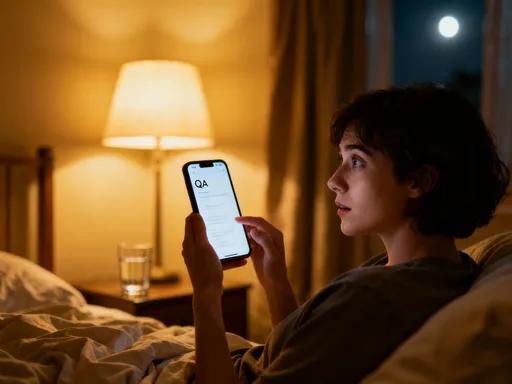
Before apps, meditation felt intimidating. I imagined incense, cushions, and hours of silence. I didn’t have any of that. What I did have was a phone and five to ten minutes before bed. That’s where meditation apps changed everything. They meet you where you are—tired, maybe a little frazzled, lying in bed with your eyes closed. No setup, no special gear. Just a tap and a voice that walks you through breathing, body awareness, or simple visualization. It’s like having a calm, grounded friend guide you out of your head and into your body.
What surprised me most was how my phone, usually the source of so much stimulation, could become a tool for peace. Instead of scrolling through endless feeds that leave me more anxious, I use it to listen to a soothing voice that says things like, “Let your shoulders drop,” or “It’s okay to rest now.” The app doesn’t demand anything. It doesn’t track your progress like a boss or shame you for missing a day. It just offers a space to be still. And in that space, something softens. You’re not trying to win at mindfulness—you’re simply learning how to come home to yourself.
Choosing the right app: Comfort over features
Not all meditation apps are created equal—especially when it comes to bedtime. Some are built for productivity, with streak counters, achievement badges, and daily challenges. That might work for morning motivation, but at night? It adds pressure. The last thing you need when you’re already stressed is to feel like you’re failing at relaxing. I learned this the hard way. I tried one app that congratulated me for my “7-day streak!” but made me feel guilty when I missed a session. It didn’t help me sleep—it made me anxious about not meditating “correctly.”
The apps that truly support nighttime calm are the ones that feel gentle, not gamified. They focus on soft guidance, warm voices, and themes like letting go, safety, and gratitude. Look for ones with sleep-specific content: body scans that help you release tension from your toes to your scalp, breathing exercises that slow your heart rate, or visualizations that transport you to a quiet forest or a moonlit beach. Nature sounds—rain, ocean waves, distant thunder—can also deepen the sense of calm.
For me, the turning point was finding an app with a narrator whose voice felt like a warm blanket. She didn’t rush. She paused often. She acknowledged how hard it is to slow down. One session began with, “It’s okay if your mind is busy. Just let this voice be a soft place to rest.” That small moment of permission changed everything. I wasn’t there to perform—I was there to receive. The best apps don’t treat you like a student or an athlete. They treat you like someone who deserves peace. And that emotional tone? It matters more than any feature list.
Creating a ritual, not a routine
At first, I treated meditation like a chore—something I “should” do, like flossing or drinking more water. And just like those things, I often skipped it. Then I shifted my mindset. Instead of seeing it as a task, I started seeing it as a gift. A small, daily act of kindness toward myself. That change in perspective made all the difference. I began pairing it with other soothing habits: turning off overhead lights, sipping chamomile tea, wrapping myself in a soft blanket. I even lit a candle sometimes—not for ceremony, but for signal. These small actions told my body, “This is different. This is rest time.”
The app became part of that ritual. Just opening it started to cue relaxation, like muscle memory for calm. I didn’t need to force myself to focus. My body began to recognize: phone in hand, lights low, voice starting—that means it’s safe to let go. I stopped worrying about doing it “right.” Some nights, I fell asleep halfway through. Others, my mind wandered the whole time. But I showed up. And over time, the act itself became comforting, regardless of the outcome.
Rituals work because they engage more than just your mind—they involve your senses, your environment, your emotions. When you attach meditation to a sensory experience, it becomes more than a habit. It becomes a homecoming. You’re not just meditating—you’re creating a nightly sanctuary, a soft landing place after a long day. And in a world that rarely slows down, that kind of intentional pause is revolutionary.
Real moments, real results: How small shifts add up
I didn’t wake up one morning transformed. There was no sudden enlightenment. But slowly, I began to notice subtle shifts—tiny victories that added up to real change. I started falling asleep faster. Not instantly, but within twenty minutes instead of an hour. I stopped dreading bedtime. More importantly, I stopped waking up at 3 a.m. with my heart racing, caught in a loop of worry. When it did happen, I found I could return to sleep more easily, often by replaying the breathing techniques from the app in my mind.
During the day, I felt different too. I had more patience—with my kids, my partner, myself. I wasn’t snapping over small things. I could pause before reacting, take a breath, and choose a kinder response. My husband noticed. “You seem lighter in the evenings,” he said one night. “Like you’re really here.” That meant more than any sleep statistic. It wasn’t just about better rest—it was about being more present in my own life.
And here’s the thing: I didn’t set out to become a calmer person. I just wanted to sleep. But the ripple effects were undeniable. When your nervous system isn’t stuck in overdrive, everything improves. Your digestion, your mood, your relationships. You stop carrying the day like a heavy backpack. You learn to put it down, even if just for ten minutes. That nightly pause didn’t fix my life—but it gave me the space to live it more fully.
Making it stick: Fitting meditation into real, messy life
Let’s be honest: life doesn’t always cooperate. Some nights, I’m too tired to open the app. Others, I forget entirely. And sometimes, I’m so frustrated—by work, by family chaos, by the laundry that never ends—that the idea of meditating feels impossible. I used to see those nights as failures. But now I see them as part of the process. The real practice isn’t perfection—it’s return. It’s opening the app the next night, or the next, without guilt or self-criticism.
What helped me stick with it was flexibility. On tough nights, I choose shorter sessions—five minutes instead of ten. Or I pick ones designed for frustration, where the narrator says things like, “It’s okay to feel angry. Let’s breathe with it.” That acknowledgment makes all the difference. I don’t have to pretend I’m calm to begin. I can start exactly as I am. The app doesn’t judge. It doesn’t care if you missed yesterday. It’s always ready to meet you where you are.
And that’s the quiet power of these tools: they’re always in your pocket. You don’t need a special room or a quiet house. You can meditate with the kids asleep down the hall, with the TV still on in the next room, with your partner reading beside you. You close your eyes, put in earbuds, and press play. In that moment, you’re not a mom, a wife, a worker—you’re just a person learning how to rest. And that’s enough.
Your evenings can be different—starting tonight
You don’t need more time. You don’t need more willpower. You don’t need to be “good” at meditation. You just need one small shift. Let your phone do something kind for once. Instead of reaching for it to scroll, reach for it to soothe. Open a meditation app, press play, and let your breath lead you home. You don’t have to clear your mind. You don’t have to stop thinking. Just listen. Just breathe. Just be.
This isn’t about fixing yourself. It’s about giving yourself the peace you’ve been missing. It’s about creating a moment in your day where you’re not responsible for anything—no decisions, no answers, no solutions. Just presence. And once you find that, you might wonder why you waited so long.
I did. And now, when I lie down at night, I don’t dread the silence. I welcome it. Because I’ve learned how to rest—not just my body, but my mind. And in a world that never stops asking for more, that might be the most radical act of self-care there is. So go ahead. Try it tonight. Your calmer nights—and brighter days—are waiting.