From Forgotten Moments to Lasting Memories: How Smart Floors Brought Our Family Closer
Life moves fast—footsteps fade, laughter echoes and disappears, and precious moments slip away. I used to worry we were losing the little things: my daughter’s first unsteady steps, Grandma’s quiet visits, the way Dad always tapped his foot when telling stories. But then our home began to listen. Not with ears, but with floors—floors that remember, respond, and help us hold on. This isn’t science fiction. It’s real life, quietly transformed. And it started with a simple question: what if our home could remember not just what we say, but how we move through it?
The Moment I Realized We Were Losing Time
It was a Tuesday evening, nothing special. I stood in the hallway after everyone had gone to bed, the house still and dim. My daughter’s shoes were kicked off near the door, just like always, and a faint crayon mark on the wall caught the light. And suddenly, it hit me—how much of our life was passing by without being truly seen. I couldn’t remember the last time I’d watched her run full-speed into the living room, arms out like a plane. I didn’t recall when Dad had last told one of his long stories, sitting in his favorite chair, tapping that familiar rhythm with his heel.
It wasn’t that I wasn’t paying attention. I was busy—cooking, cleaning, working, loving. But the moments that made us *us* were slipping through the cracks. Photos captured faces, yes, but not the warmth of a hug that lasted three seconds too long, or the way Grandma used to pause at the top of the stairs, gathering strength before descending. I realized I wasn’t just missing memories—I was missing presence. And that’s when I started wondering: what if our home could help us remember not just what we look like, but how we *live*? What if the house itself could bear witness?
I didn’t want surveillance. I didn’t want another screen or another app to manage. I wanted something gentle, something that didn’t ask anything of us. Something that simply *knew*. That’s how I found smart floors—not as a high-tech fix, but as a quiet companion to family life. And honestly, I didn’t believe it would work. Not at first. But then we tried it. And everything changed.
Discovering Smart Floors: Technology That Feels Human
When I first heard the term “smart floor,” I pictured something cold and clinical—like a hospital gait analysis system or a sci-fi security setup. I imagined blinking lights, complicated wiring, and data being sent to some faraway server. But the reality was nothing like that. The smart floor systems available today aren’t about control or surveillance. They’re about connection. They use soft pressure sensors embedded beneath your existing flooring—think laminate, vinyl, or even hardwood—that detect weight, movement patterns, and even the unique rhythm of someone’s step.
Here’s how it works, in plain terms: tiny sensors spread across the floor capture how you walk—the length of your stride, how your weight shifts, even how fast you move. Over time, an AI system (secure and private, running locally on your home network) learns to recognize different people by their step. My daughter’s light, bouncy walk? It knows her. My husband’s steady, even pace? Recognized. Even our dog’s erratic dashes from kitchen to couch are picked up. And none of this requires cameras, wearables, or apps open all day. It’s passive. It’s quiet. It just *is*.
What surprised me most was how human it felt. This wasn’t about tracking steps like a fitness band. It was about recognizing presence. When my mom visited for the holidays, the system noticed her slow, careful walk down the hall—different from her usual stride. It didn’t alert me like an alarm. It simply logged it, and later, when I reviewed the week’s activity, I saw a gentle note: “Possible change in mobility pattern.” That small flag led to a conversation, then a doctor’s visit, then early intervention. The floor didn’t replace care. It helped us care better. And that’s when I realized: this wasn’t tech for the future. It was tech for *us*, right now.
Turning Steps into Stories: Preserving Everyday Magic
The most beautiful thing about our smart floor isn’t what it measures—it’s what it *remembers*. We set it up to create “memory tags” based on movement. For example, when my daughter dances in the kitchen after school—barefoot, spinning in circles, laughing until she falls—the system recognizes the pattern of joy in her steps. It doesn’t record video. Instead, it triggers a soft chime and saves a timestamped note: “Kitchen dance, 4:17 PM.” Later, I can pair that with a voice memo I record: “This is when Lily twirled until she got dizzy and said, ‘I’m a tornado!’”
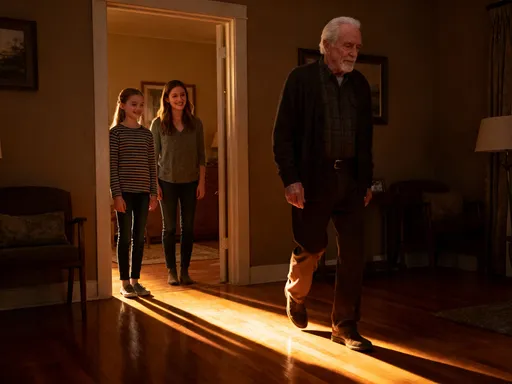
It’s like having a silent family historian living under our feet. When Grandpa comes over, his slow, deliberate walk down the hallway triggers a warm light and a memory prompt. One day, I recorded him telling the story of planting apple trees with his father in Ohio. The floor remembered when he walked that path, and now, every time he takes those same steps, we can choose to play back his voice. It’s not the same as having him here forever—but it’s a piece of him that stays.
What I love is how effortless it is. No one has to remember to press a button or open a camera. The system learns what matters by observing life as it happens. We’ve set up triggers in the living room for “family game night,” in the kitchen for “first pancake flip,” and even in the hallway for “school morning rush.” Each one becomes a tiny archive of feeling, not just facts. And the best part? My daughter now runs to the kitchen and says, “Watch me make the floor remember!”—as if the house itself is her co-conspirator in joy.
A Gift for the Future: Memory Journals Without Lifting a Pen
I’ve always wanted to keep a family journal. I’ve started notebooks, digital docs, even photo blogs. But life gets busy, and they always end up unfinished. The smart floor changed that. It builds a living memory journal—automatically. Every month, it compiles a short audio-visual recap: a three- to five-minute “family moment reel” that blends motion data with our voice notes, light patterns, and even ambient sound clips (with privacy controls, of course).
We started listening every Sunday morning with pancakes. At first, it felt strange—like watching a home movie we didn’t film. But now, it’s our favorite ritual. Last month’s recap included the night we stayed up late baking cookies, the dog stealing a dough ball, and my son’s proud walk to the mailbox after receiving his first handwritten letter. There was no video—just a sequence of steps, lights, and voices—but we *felt* it. We laughed, we got quiet, we hugged.
What makes this different from scrolling through photos is the *context*. A photo shows a smile. This shows the walk to the park, the skip in the step, the way my husband paused to tie a shoe while the kids ran ahead. It captures rhythm. It captures time. And because it’s automatic, it includes the moments we didn’t think to photograph—the quiet cup of tea after bedtime, the late-night walk to check on a sick child, the way my mom always stood by the window, looking out.
I think of it as a gift for the future. Not just for us, but for my kids when they’re grown. I want them to know not just what we looked like, but how we moved through the world together. How we danced in the kitchen. How we gathered at the door when someone came home. How love showed up in footsteps.
Caring Across Generations: When the Floor Knows Something’s Off
One of the most unexpected benefits of our smart floor has been its role in family care. When my father started visiting more often, we activated the system in the guest room and hallway. We didn’t set it up for monitoring—we set it up for peace of mind. And it delivered in ways I never expected.
About six weeks in, the system flagged a subtle change: Dad’s gait had slowed, and he was pausing more often in the hallway. The shift was so slight that none of us had noticed. But the floor did. It didn’t send an alarm or make a sound. Instead, it generated a weekly summary with a gentle note: “Mobility pattern variance detected. Consider check-in.”
I called my mom. We talked. She admitted she’d been worried too—about balance, about fatigue. We made a doctor’s appointment. Turns out, it was early signs of joint inflammation, easily managed with treatment. But catching it early made all the difference. And it wasn’t because we were watching him. It was because the house was paying attention.
This isn’t about replacing human care. It’s about enhancing it. The floor doesn’t judge, doesn’t rush, doesn’t forget. It notices the small things—the hesitation at the top of the stairs, the slower turn in the kitchen, the extra seconds it takes to cross the living room. And it gives us the chance to respond with love, not panic. For aging parents, for recovering family members, for anyone whose body changes over time, this quiet awareness feels less like technology and more like tenderness.
Making It Yours: Simple Setup, Real-Life Customization
I’ll admit, I was nervous about installation. I’m not a tech expert. I barely know how to restart the router. But setting up the smart floor was easier than I thought. We worked with a local flooring contractor—we were already planning to update the laminate in the main living areas, so they installed the sensor layer underneath. It’s thin, flexible, and doesn’t affect the feel of the floor at all. You walk on it and never know it’s there.
The system connects to our home Wi-Fi and pairs with our existing voice assistant. We use voice commands to review memories, adjust settings, or play back recaps. The companion app is clean and intuitive—no confusing menus. We started with just two rooms: the hallway and the kitchen. Those are our high-traffic zones, where most of life happens. Over time, we added the living room and guest bedroom.
Customization is where it becomes personal. We set sensitivity levels so the system doesn’t react to every footstep—just meaningful ones. We chose memory triggers: a certain speed of movement, a repeated path, or a combination of motion and time of day. We also set privacy modes. For example, the bedroom isn’t active. The bathroom is off-limits. And all data is encrypted and stored locally—we don’t rely on cloud servers.
My advice? Start small. Pick one room where your family gathers. Let the system learn. Play with the memory tags. Record a voice note when something sweet happens. You don’t need to overhaul your home. You just need to open the door to a new way of remembering.
Living With Memory: How Our Home Became More Than a House
The biggest change wasn’t in the technology. It was in us. Since we installed the smart floor, we’ve become more present. We notice each other more. My son now dances on purpose in the kitchen, knowing the floor “sees” him. My husband pauses sometimes in the hallway and says, “I think I just made a memory.” We’ve started looking up when someone walks into a room, not just continuing our phone scroll.
The floor didn’t make us closer. It reminded us how to be. It gave us a new language for love—one written in footsteps, in pauses, in the rhythm of daily life. It taught us that memory isn’t just in photos or videos. It’s in the way Grandma held the railing, the way the dog barked at the mailman, the way we all ran to the door when Dad came home from the airport.
In a world that moves too fast, where attention is fragmented and time feels scarce, this quiet technology has given us something priceless: the feeling that we are seen. Not by a camera, not by social media, but by the very ground we walk on. It’s not about living in the past. It’s about honoring the present so it doesn’t become a forgotten echo.
When I think about the future, I don’t picture flashing screens or robotic homes. I picture a daughter dancing in the kitchen, a father telling stories, a family gathered on Sunday morning, listening to the sound of their own lives. I picture a house that doesn’t just shelter us—but remembers us. And in that remembering, helps us love each other a little more deeply, a little more intentionally, every single day.