From Distant to Together: How Video Calls Brought Our Family Back to the Table
Family dinners used to mean empty chairs and silent phones—until video calls quietly changed everything. You’re not alone if you’ve felt the ache of missing loved ones during holidays or wondered how to stay truly connected across miles. I remember pressing “join” on a shaky Wi-Fi connection one rainy Sunday, only to see my grandmother’s smile fill the screen. That small moment sparked something big: real conversations, shared recipes, and laughter that echoed through speakers. This is how technology stopped being just a tool—and became part of our family story.
The Empty Chair at the Holiday Table
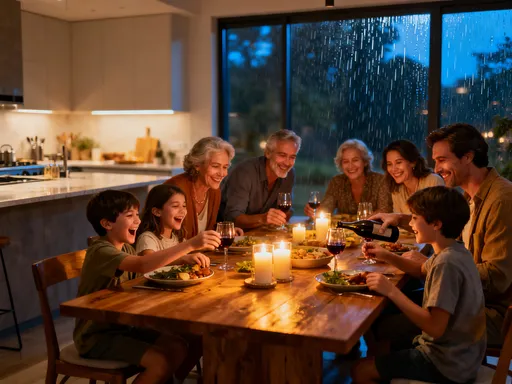
There’s a certain kind of quiet that settles over a holiday dinner when someone is missing. It’s not the peaceful kind of quiet after a good meal, where everyone leans back with full bellies and soft smiles. It’s the heavy kind—the kind that fills the space where a voice should be, where a laugh used to ring out, where a familiar face should light up the room. I remember one Thanksgiving in particular. The table was set just right: crisp linen, heirloom dishes, candles flickering. But one seat remained empty. My sister had moved across the country for work, and her absence was more than physical—it was emotional, like a thread had been pulled loose from the fabric of our family.
We tried to stay close. We really did. There were text messages: “Hope you’re doing well!” “Have a good one!” And the occasional voice note, her voice crackling through the speaker as she described her takeout turkey dinner. But it wasn’t the same. Words on a screen felt flat, one-dimensional. You can’t see the way someone’s eyes crinkle when they laugh, or how they gesture with their hands when they talk about something they love. We were sharing information, but not connection.
And it wasn’t just holidays. Birthdays passed with a quick call. My nephew took his first steps while we watched a shaky 15-second video. My mom celebrated her 60th with a group text thread that fizzled out by noon. We were close in heart, yes—but far in practice. The truth was, distance was winning. It wasn’t anyone’s fault. Life had pulled us in different directions, and we were doing our best. But “doing our best” still left us feeling like we were missing out on the moments that mattered most.
I think many of us carry that quiet ache. Maybe it’s a parent aging in another state, a child starting college across the country, or cousins scattered from coast to coast. We love them deeply, but geography keeps us apart. And for years, we accepted that as just the way things were. But then, slowly, something shifted. Not the distance, but how we responded to it. Because one day, instead of sending a text, I opened a video call. And when my sister’s face appeared on the screen, messy hair and all, something inside me softened. She wasn’t just a voice. She was right there.
When Screens Became Bridges, Not Barriers
The first few video calls were, let’s be honest, a little awkward. I remember holding my tablet like I was filming a home movie, the camera pointed directly at the ceiling. My mom kept waving at the back camera, not realizing she was showing us the kitchen wall. And my nephew, bless him, would run in and out of frame like he was playing hide-and-seek with the entire family. There were frozen screens, echoey audio, and moments when someone would say, “Hello? Can you hear me?” for the third time in two minutes.
But even with the glitches, something felt different. It wasn’t just hearing my sister’s voice—it was seeing her. Seeing the way she sipped her coffee in the morning light, how she tucked her hair behind her ear when she was thinking. I noticed the new plant on her windowsill, the book on her nightstand. These tiny details made her feel real, present, even though she was hundreds of miles away.
The real turning point came during a snowstorm. A big one. The kind that shuts down highways and cancels flights. I was home, the power still on, watching the snow pile up outside. On a whim, I sent a video call to my parents. My dad answered, bundled in a sweater, surprised but happy. We started talking about nothing important—the weather, the dog, what we were making for dinner. But we kept talking. And talking. Two hours passed like minutes. My mom joined in, then my sister called in from her apartment. We were all in different places, but for the first time in a long time, we felt like we were in the same room.
That call changed something. It wasn’t just a “check-in” anymore. It was being together. We could see each other’s expressions, react in real time, share a moment as it happened. My mom could show us the pie she’d just pulled from the oven. My nephew could proudly display his latest drawing. We could laugh at the same joke at the same time, not hours apart in a text thread. The screen stopped being a barrier. It became a bridge.
And here’s what surprised me most: the emotional weight of small things. When my dad paused the call to cough, I felt concern. When my sister smiled at something her partner said off-camera, I felt joy. These weren’t just updates—they were experiences. We weren’t just staying in touch. We were staying in tune.
Seasons Change, So Do the Ways We Connect
What I didn’t expect was how naturally video calling wove itself into the rhythm of our seasons. It wasn’t just for holidays or emergencies. It became part of everyday life, shifting with the calendar like a well-worn family tradition.
In winter, it’s all about togetherness. We gather around the Christmas tree, not just in one living room, but in four. We set up tablets on tripods, angle them just right so everyone can see the lights, the ornaments, the dog nosing through the presents. We do virtual gift exchanges—someone opens a present on camera, and the others cheer from their homes. Last year, my niece screamed with delight when she saw her new bicycle, and we all clapped like we were right there beside her. It wasn’t the same as being in the same room, but it was close. And in a way, it felt even more special because we made the effort to be together, despite the distance.
Summer brings a different kind of magic. My parents have a pool, and the grandkids love it. So now, when they come over, we set up a tablet by the edge, propped on a waterproof stand. My sister, who lives too far to visit often, gets to watch her kids splash and swim, shouting encouragement through the speaker. “You did it! That was amazing!” she’ll yell, and the kids will turn and wave, grinning. It’s not just about seeing them play—it’s about being part of the moment. She’s not just a spectator. She’s there, in spirit and in sound.
Spring and fall bring quieter joys. We do virtual garden tours—my mom shows us her tulips blooming, my brother points out the new birdhouse he built. We share cooking sessions: one Sunday, we all made my grandmother’s apple pie recipe at the same time. We followed along on video, comparing crusts, laughing when someone’s filling was too runny. We even did a virtual taste test, holding up our slices and rating them on a scale of one to delicious. It was silly, but it was ours.
And birthdays? We don’t just send cards anymore. We gather on screen, sing together (even if we’re off-key), and watch the birthday person blow out the candles. The cake might be in Texas, but the celebration is everywhere. Each season brings a new reason to connect, a new way to share life as it unfolds. And because we’ve made it a habit, it doesn’t feel like a chore. It feels like coming home.
More Than Talking: Doing Things Together, Apart
One of the most beautiful shifts has been moving from just talking to actually doing things together. At first, our calls were mostly catch-ups: “How’s work?” “How’s the dog?” “Have you seen the news?” But over time, we started looking for ways to collaborate, to create something together, even from afar.
It started with baking. My grandmother used to make the most incredible cinnamon rolls, and after she passed, we realized no one had the recipe written down. So we pieced it together from memory, and one weekend, we all decided to try making them together over video. We had our ingredients out, our aprons on, and we walked through each step as a group. Someone would say, “Wait, how much cinnamon did she use?” and we’d debate it like it was a family mystery. We laughed when one batch came out too dry, celebrated when another rose perfectly. But more than the rolls, we created something else: a shared memory, a new tradition.
Then came the bedtime stories. My sister has two young kids, and when she travels for work, she worries about missing their routines. So now, even when she’s away, she reads to them over video. She holds up the book, turns the pages slowly, does all the funny voices. The kids sit on the couch with their dad, following along with their own copy. It’s not the same as being tucked in by mom, but it’s close. And when she says, “I love you,” and they say it back, the screen can’t hide the emotion in their voices.
We even started building playlists together. Every summer, we take a family road trip—well, some of us do. But now, we create a shared music list in advance. We add songs that remind us of each other, that make us laugh, that we think the kids will sing along to. One aunt added a 90s boy band hit, my nephew put in a cartoon theme song, and somehow, it all works. We don’t all ride in the same car, but we listen to the same music, and that feels like a kind of togetherness.
My favorite ritual? Our weekly family puzzle hour. We buy the same 500-piece puzzle, mail it to each house, and every Sunday night, we gather on video to work on it together. We talk, we laugh, we complain about the sky pieces being impossible to tell apart. We cheer when someone finds a corner piece. It’s not just about finishing the puzzle—it’s about the time, the focus, the shared goal. We’re not just communicating. We’re co-creating. And that makes all the difference.
The Quiet Growth of Togetherness
What I didn’t anticipate was how much these video calls would change us, not just in how we connect, but in who we are as a family. It wasn’t just about seeing each other more often. It was about learning how to be together, even when we’re apart.
The kids have grown more patient. They wait their turn to speak, learn to describe what they’re feeling instead of just shouting, “Look at me!” They’ve become better listeners, not because we told them to, but because they see how much Grandma lights up when they tell her about school. And the older members of our family? They feel heard. Really heard. My mom used to hesitate before speaking, worried she’d be interrupted or that her stories were “too long.” Now, she shares freely. She knows we’re watching, that we care. And that has given her a kind of confidence I hadn’t seen in years.
Siblings have reconnected, too. My brother and I used to bicker as kids, and even as adults, we’d fall into old patterns during visits. But over video, something shifted. Without the pressure of being in the same space, we became more relaxed. Old jokes resurfaced. We started teasing each other again, not in a mean way, but in that warm, familiar way that only siblings can. We began planning small surprises for each other—sending books we thought the other would like, sharing recipes, checking in just to say, “Hey, I was thinking about you.”
And decision-making? It’s gotten easier. When we needed to plan a family reunion, instead of a chaotic group text, we had a video call. Everyone could speak, show photos of potential locations, react in real time. When a misunderstanding came up, we didn’t let it fester in a text thread. We talked it out, saw each other’s expressions, clarified with kindness. We didn’t realize we were learning to collaborate better—until we did.
There’s a quiet strength in this kind of connection. It doesn’t shout. It doesn’t demand attention. But it’s there, steady and warm, like a fire in the hearth. We’ve learned that family isn’t just about proximity. It’s about presence. And presence isn’t measured in miles—it’s measured in moments.
Making It Work Without the Tech Stress
I’ll be honest—it didn’t always go smoothly. There were dropped calls, frustrated sighs, and moments when someone said, “I just don’t get this technology.” But we learned. And what I’ve found is that a few small changes can make a big difference in making video calls feel natural, not stressful.
Lighting matters. We used to call in dim rooms, and everyone looked like a ghost. Now, we try to sit near a window or turn on a soft lamp. It makes a huge difference in how clearly we can see each other. Sound, too. Background noise can ruin a call. We’ve learned to mute when someone’s not speaking, to step away from the kitchen when the blender is going. And camera angle—no one wants to look up someone’s nose. We prop tablets on books or use simple stands so the camera is at eye level.
Timing is everything. We have family in three different time zones, so we plan ahead. We pick a time that works for everyone—not perfect for anyone, but fair for all. And we pay attention to energy levels. A call at 8 p.m. for one person might be 11 p.m. for another. We ask, “Are you up for this tonight?” instead of just calling.
For the less tech-savvy, we keep it simple. My mom used to panic at the thought of joining a call. So we set up one-tap shortcuts on her tablet. We labeled the button “Family,” and now she taps it with confidence. We also created a routine: same time every week, same opening phrase (“Hi everyone!”), same spot on the couch. Rituals reduce friction. They make connection feel effortless.
We even got a digital photo frame for my parents. It cycles through pictures from all of us, so even when we’re not on a call, they see our faces every day. It’s a small thing, but it keeps us close in spirit.
The goal isn’t perfection. It’s presence. If the call freezes for a second, we laugh. If someone forgets to unmute, we wait. We’ve learned that the tech doesn’t have to be flawless for the moment to be meaningful.
The Table Is Bigger Now—And It’s Always Set
Looking back, I realize video calling didn’t fix our distance. It didn’t make the miles disappear. What it did was help us embrace the distance, not as a barrier, but as a space we could bridge with intention, love, and a little bit of Wi-Fi.
Our family table is bigger now. It doesn’t have a fixed location. It expands to include wherever we are. It’s not just the physical table with the scratched wood and mismatched chairs. It’s the digital space where we gather, where we laugh, where we belong. And it’s always set. Always ready.
We’ve learned that togetherness isn’t about being in the same room. It’s about showing up. It’s about pressing “join” even when you’re tired, even when the connection is shaky, even when life feels too busy. It’s about choosing, again and again, to be part of each other’s lives.
And now, when I look at that empty chair at the holiday table, I don’t just see absence. I see possibility. Because that seat? It’s still there. And through the glow of a screen, someone is sitting in it, smiling, saying, “Happy Thanksgiving.”
Technology didn’t replace our family rituals. It expanded them. It didn’t erase distance. It made love louder than miles. And in a world that often feels too fast, too fragmented, that’s a gift worth holding onto.